



We are the chair design of structures at the Faculty of Architecture of the Karlsruhe Institute of Technology. The work at dos focuses on the design of structures and combines research on innovative materials and building systems, especially in the context of digital tools and computational technologies, to develop sustainable and resource-efficient solutions for civil engineering and architecture.
Our goal is to create integrative solutions for structural engineering, as well as to explore new structural concepts through design, prototyping and digital technology.

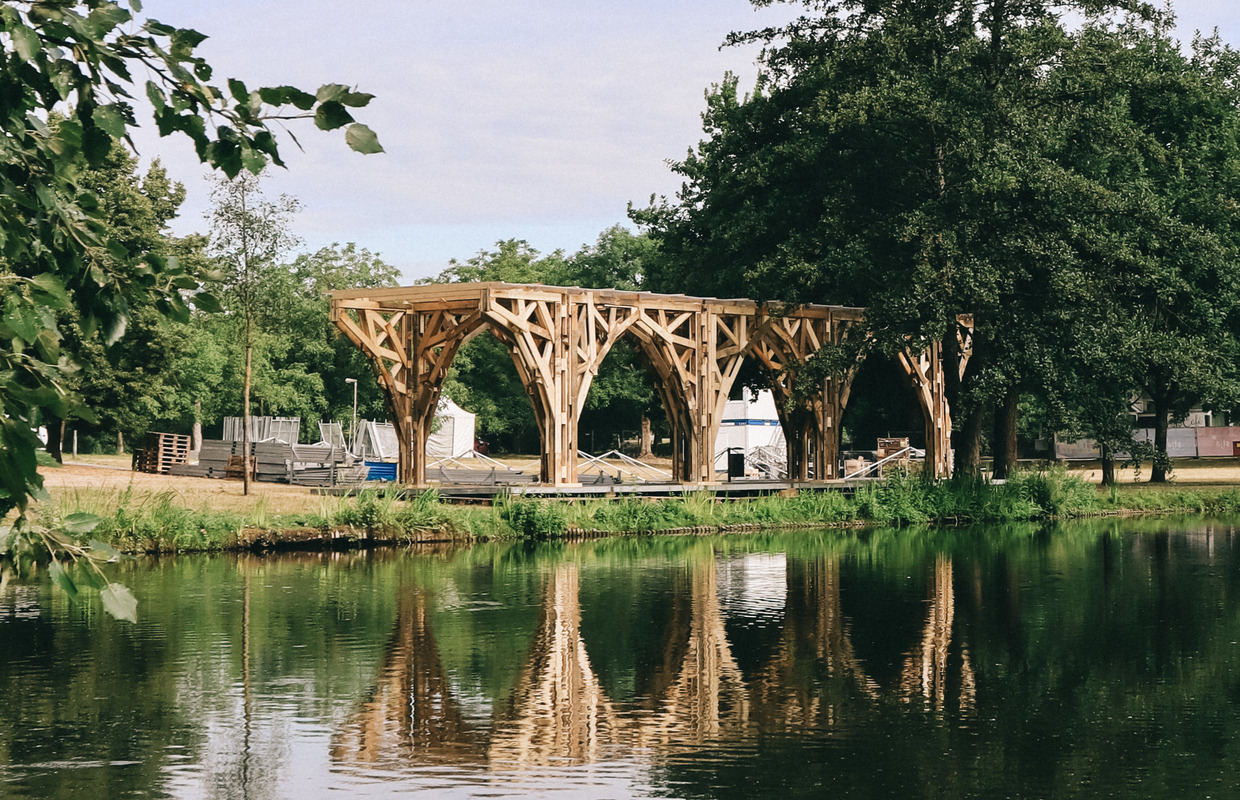
We’ve just published our article on the elastically bent geodesic timber column from our Komorebi project in Frontiers in Built Environment.
Learn more...
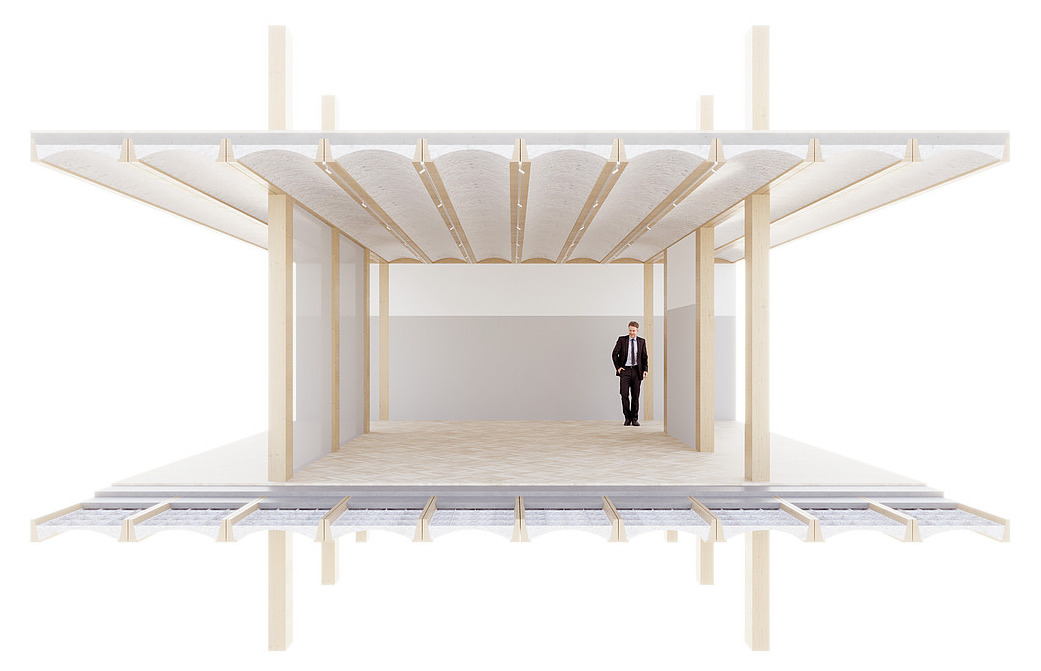
We are very pleased to be able to work on the innovative research project HolSDeck: Load-Bearing Ceilings Made of Wood and Rammed Earth, which aims to develop a prefabricated ceiling system made of wood and rammed earth, and we would like to express our sincere thanks to the Sto Foundation for their funding and valuable support.
Learn more...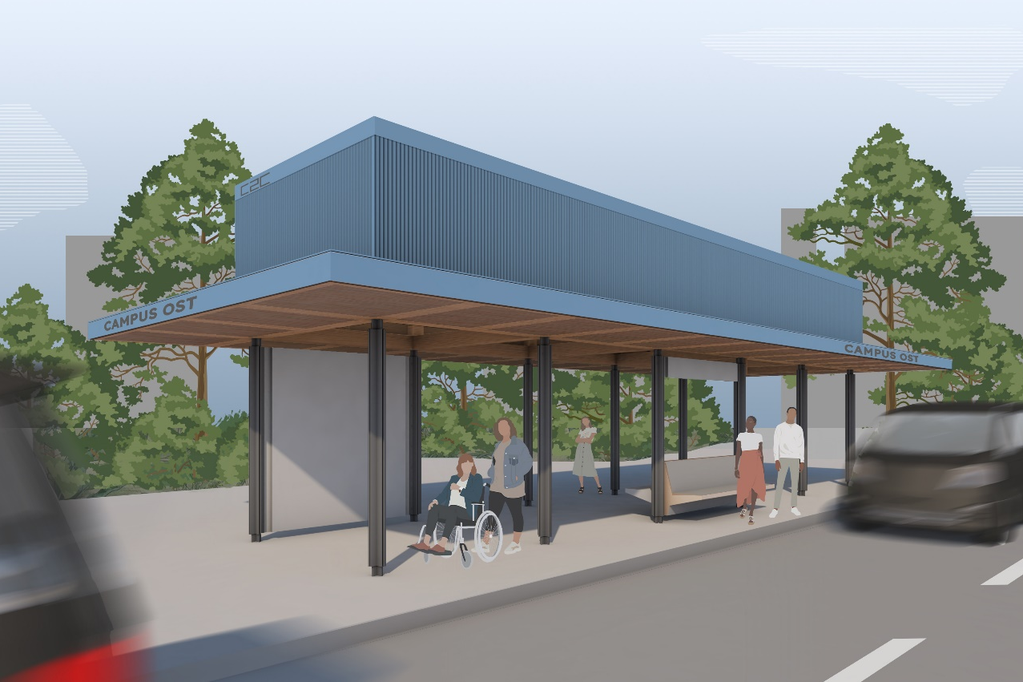
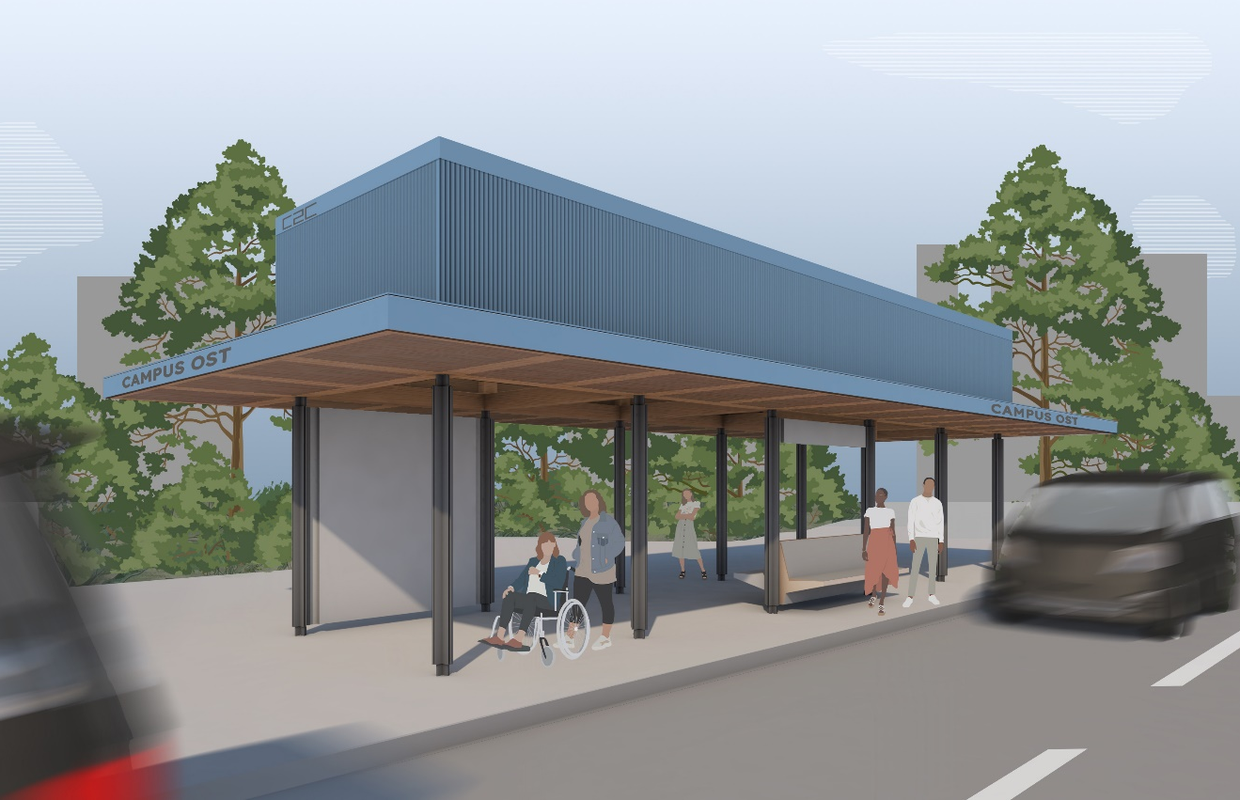
To make modern passenger transportation in rural areas more flexible and integrate commuter flows more efficiently into public transit, the interdisciplinary “Country to City Bridge” project is researching a customized service using autonomous on-demand vehicles.
Learn more...
Our colleague David presented his paper “Mechanical and geometric fundamentals for the inverse design of spatial geodesic strips” at the IASS Symposium 2026 in Turin. The paper presents a novel technique for the controlled bending of geodesic strips through tailored incisions.
Learn more...
Our colleague Christina presented her paper “A multi-level design approach for salvaged timber” at the Design Modelling Symposium 2026 in Lausanne/ Fribourg. The paper addresses the challenge: How can we efficiently ensure structural reliability when working with salvaged timber components?
Learn more...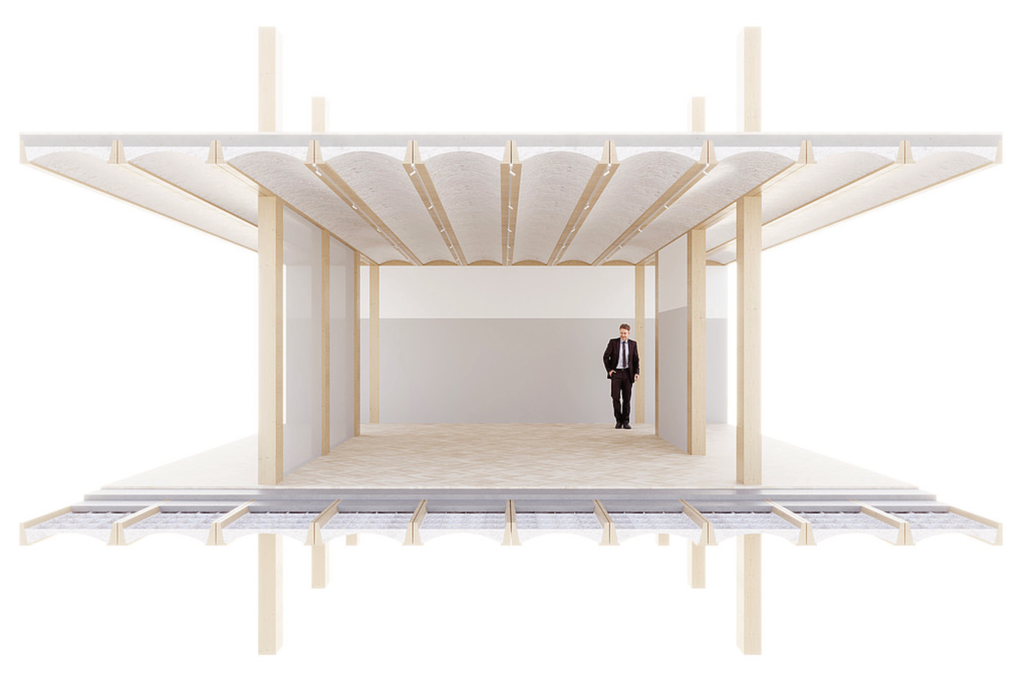
MyCeiling is a project aiming to develop a modular lightweight construction system for ceiling structures made from compacted mycelium shells. This marks the first time that load-bearing components based on mycelium have been developed using the structural design and compaction techniques devised within the project.
Learn more...
How can historic structural systems be understood, evaluated and preserved? The impromptu ‘Structural systems of the past – from damage assessment to implementation’ provides insights into the investigation and analysis of existing historic structural systems.
Learn more...

The module Structural Engineering teaches the fundamental functions and modes of action of the essential different structures as well as the importance of structural design in the architectural design process.
Learn more...
The Building & Structure seminar examines the functional and effective modes of structural design in more detail. Therefore, the use and the limitations of materials like timber, steel, concrete, and clay will be analysed in detail.
Learn more...
The interdisciplinary seminar " Timber Structures: Materials and Appropriate Design " covers the building material wood, the derived construction products, and their appropriate application.
Learn more...
The design of a pedestrian bridge usually involves close cooperation between architects and civil engineers. Such a task awaits you in this interdisciplinary seminar:
Learn more...
In the seminar “LAB — Lightweight as a Bond”, the name is the concept: like a laboratory setup, the course examines design, structure and fabrication as one coherent whole, in theory and in practice.
Learn more...